

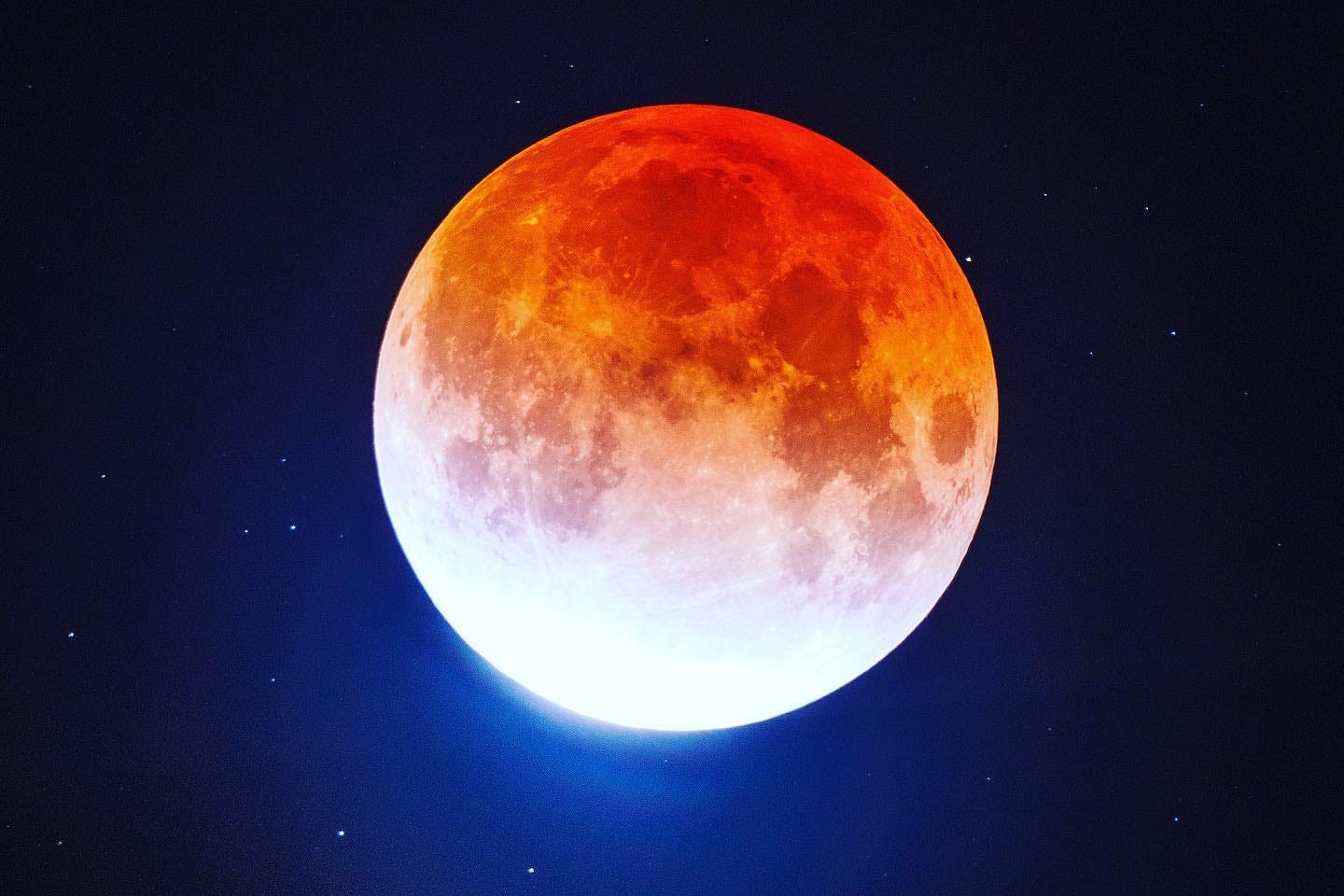
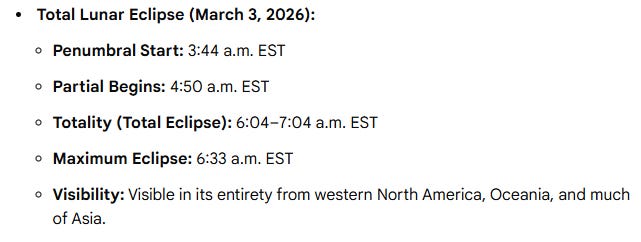
A total lunar eclipse is arriving this week, and it’s one of those sky moments that feels both ancient and intimate. On March 3, 2026, the Moon will slip fully into Earth’s shadow, turning a deep copper-red for nearly an hour, a true “blood moon,” visible across much of the world. It’s rare enough that we won’t see another like it for a while, and that rarity gives it weight. It slows me down. It makes me look up with a different kind of attention.
Whenever an eclipse approaches, I feel that familiar pull inside of me, the sense that creation is inviting me to step outside, breathe the night air, and remember that I’m part of something far bigger than my daily worries. The Moon has been a steady companion in my life, a quiet reminder of God’s consistency. But an eclipse? That’s different. It’s the Moon doing something unexpected, slipping into shadow, emerging again in fullness. It mirrors the seasons of my own faith: moments when God feels hidden, followed by moments when His presence breaks through again, unchanged.
This week’s eclipse feels especially timely. I’ve been carrying more than I admit. Some days my faith feels thin, stretched, or tired. But the Moon doesn’t panic when the shadow comes. It doesn’t question its place. It simply moves through the darkness, trusting the path set before it. And every time, the light returns.
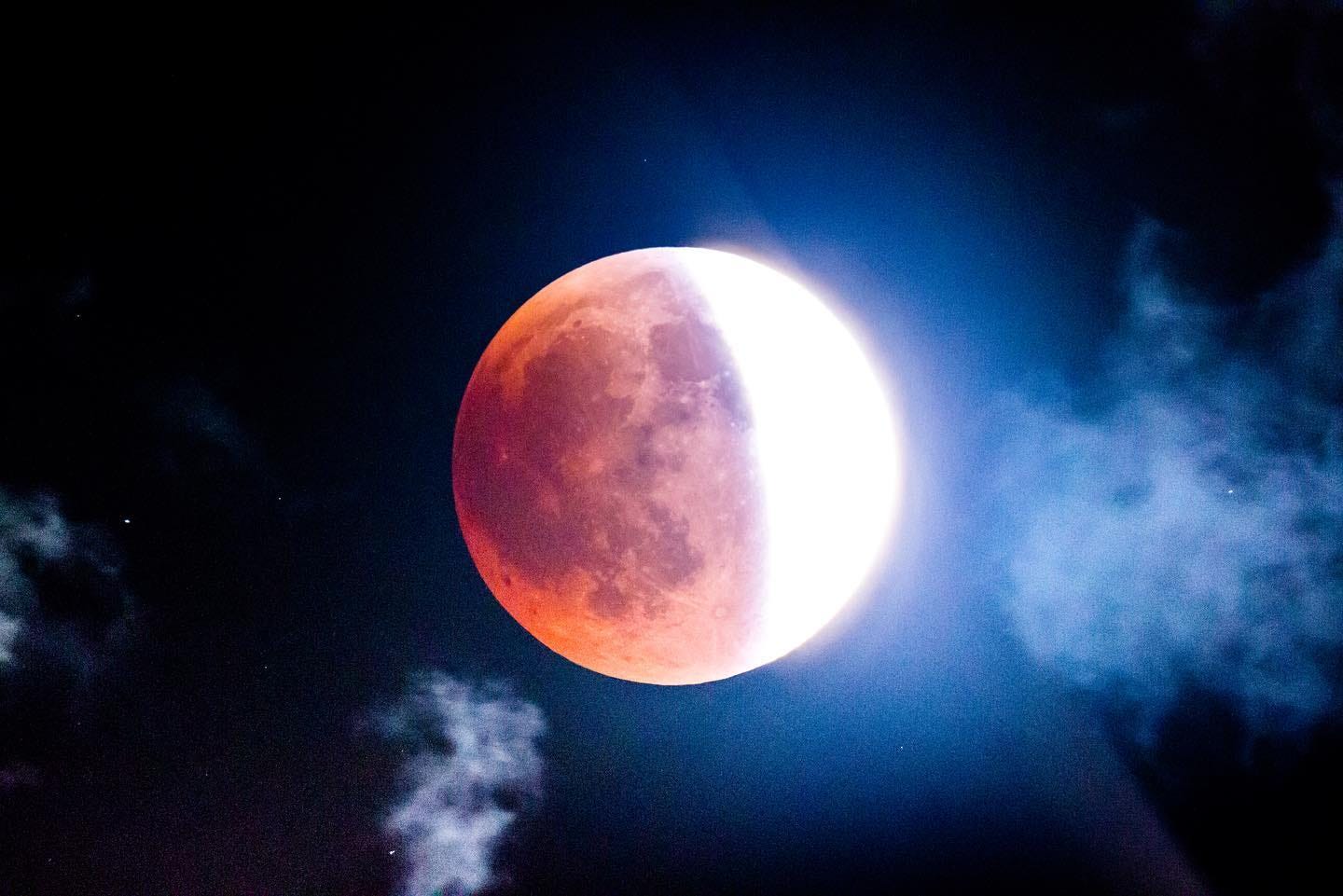
Scientifically, a lunar eclipse is simple: Earth moves between the Sun and the Moon, casting its shadow across the lunar surface. But for thousands of years, people saw eclipses as signs, moments when heaven was speaking in a language of light and shadow. Even today, the Moon turning red stirs something instinctive in us. It’s beautiful, but also humbling. It reminds us that creation is not static; it’s alive, rhythmic, and purposeful.
The Bible doesn’t describe lunar eclipses in scientific terms, but it does speak of the Moon darkening or turning to blood in moments of spiritual significance. The prophets used this imagery to express awe, warning, or divine nearness. Peter echoes Joel’s words about “the moon turned to blood” as part of God’s unfolding story. These passages aren’t meant to make us fear the sky; they’re meant to remind us that God uses creation to get our attention, to stir our hearts, to remind us of His sovereignty.
And that’s what I feel when I watch an eclipse, not dread, but reverence. Not a sign of the end, but a sign of the One who holds the end and the beginning.
As the Moon enters Earth’s shadow, I’m reminded that shadows don’t mean abandonment. God’s faithfulness isn’t measured by how bright the night feels. Sometimes He teaches us through the dimness, through the waiting, the quiet, the slow return of light.
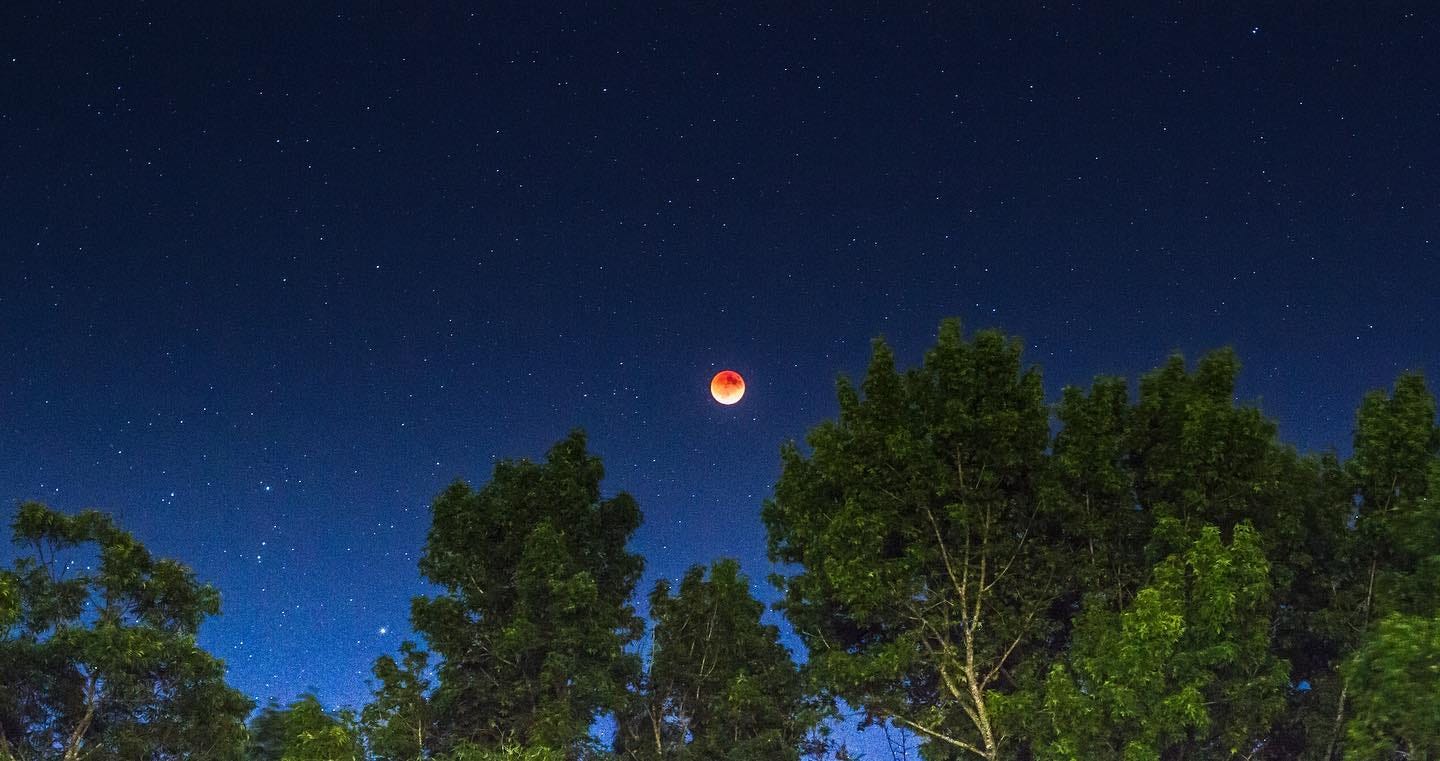
This eclipse is a chance to step outside and let the sky preach a sermon older than any of us: God is constant. His rhythms are trustworthy. His light returns.
Even when we feel eclipsed by our circumstances, He is not eclipsed. He is steady. He is near.
I’ll be outside with my camera, capturing this week’s Moon as it slips into that deep red glow. But more than that, I’ll be standing there with open hands, letting God remind me—again—that He is faithful in every phase, every shadow, every return of light.
This is a powerful reminder. Even when our faith feels shadowed, God’s presence does not waver. Just as the Moon moves through darkness and emerges in fullness, we can trust that light will return and His faithfulness remains constant.